
Places to Visit in Darjeeling: Top Attractions in the Queen of the Hills
The places to visit in Darjeeling run from sunrise at Tiger Hill to a working steam railway and tea gardens on every slope. Here is each one, with a realistic plan for fitting them into two, three or four days.
The places to visit in Darjeeling are unusually close together, which is the good news, and almost all of them sit on steep ground, which is the catch. The town runs along a ridge at about 2,045 m; sightseeing means dropping into valleys and climbing back out, and a day that looks light on a map can take a great deal longer than you expect.
What follows is grouped the way a driver would actually work through it — the early sunrise run first, then the Ghum side, then the institutions on the western slope, then the town itself. Practical matters such as transport, permits and packing are covered on the Darjeeling and Kalimpong travel information page.
Best Places to Visit in Darjeeling
Nine places that carry most Darjeeling itineraries, roughly in the order a sensible day puts them.
Tiger Hill
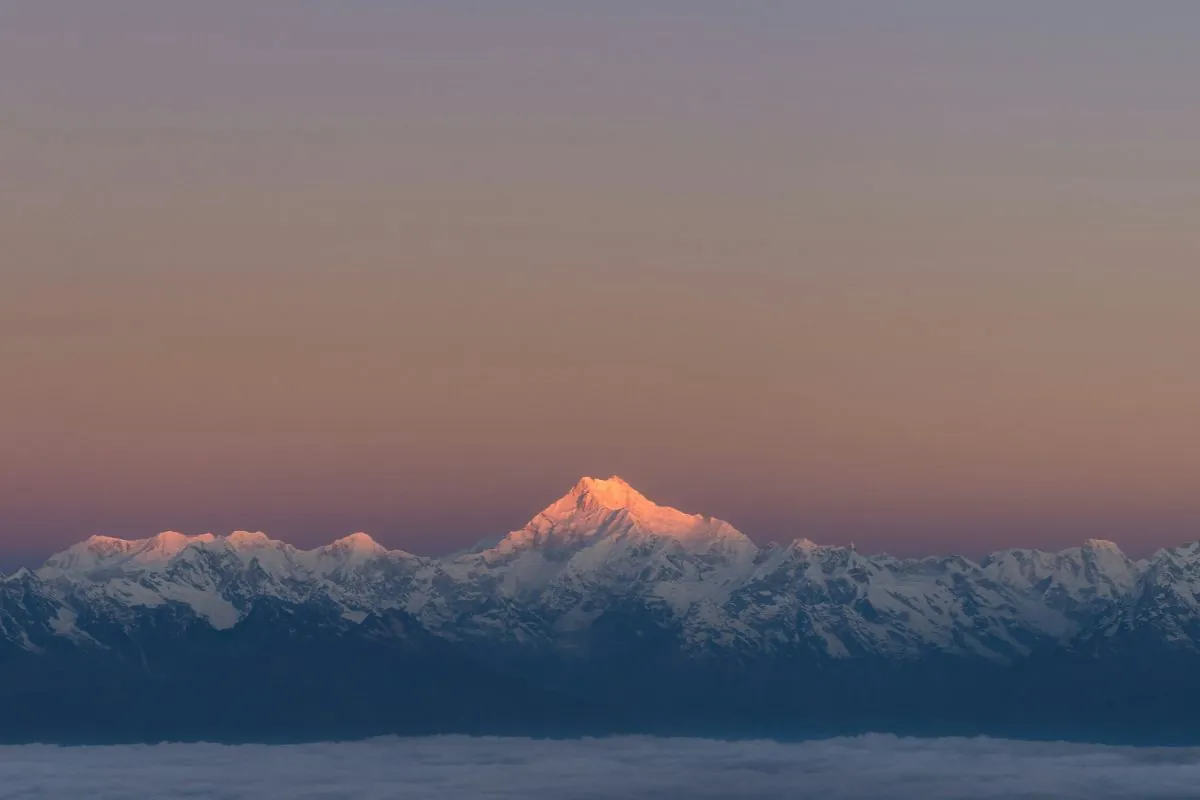
About 11 km from town at roughly 2,590 m, Tiger Hill is where Darjeeling watches the sun come up over Kangchenjunga. On an exceptionally clear morning Everest is visible far to the west as a small dark triangle.
It means leaving in the dark, usually around four in the morning, and joining a queue of vehicles on the approach road. Take a warm layer more than you think you need. What you actually see is decided by the weather, and nobody can promise you a clear sunrise.
- About 2,590 m
- Pre-dawn start
- Clearest October to December
- Vehicle numbers managed
Batasia Loop
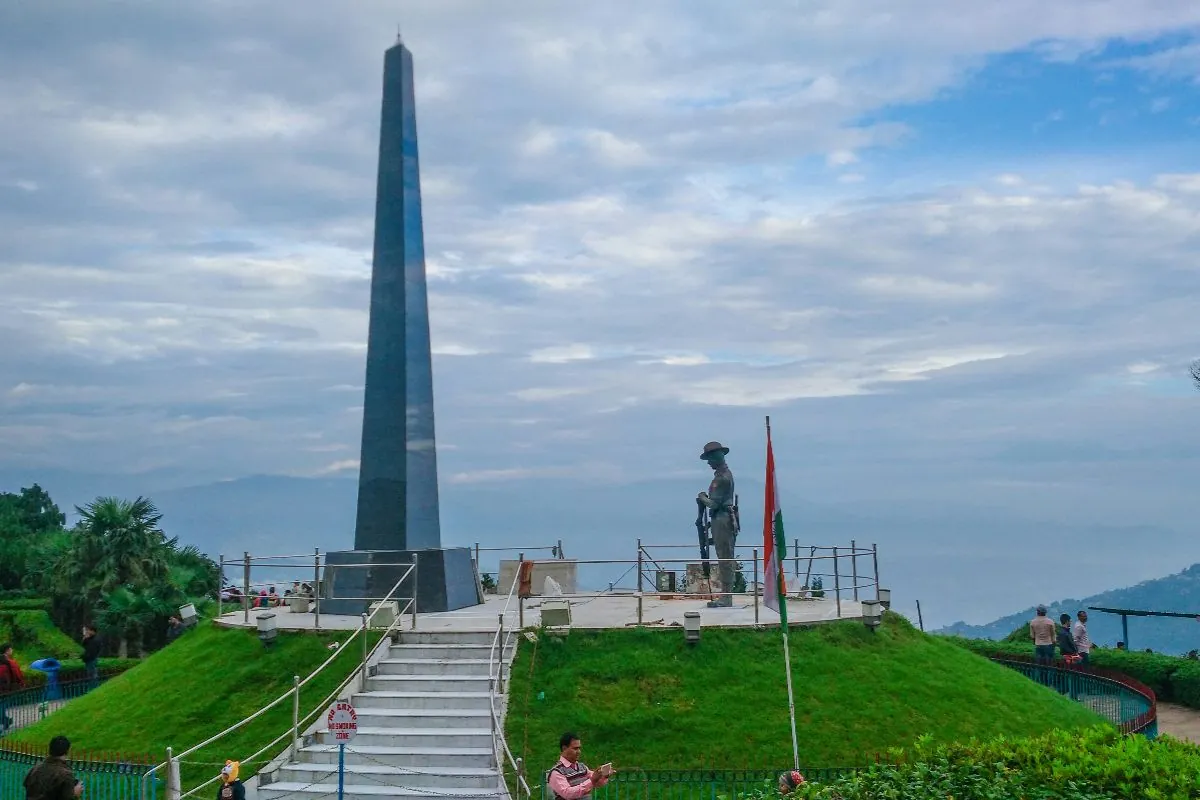
A few kilometres below town the railway spirals through a complete loop to lose height, and the ground inside it has been laid out as a garden around the Gorkha war memorial. Most Tiger Hill trips stop here on the way back down, which is exactly when the light is best.
It is a short stop — twenty minutes is enough — and it pairs naturally with Ghoom Monastery a little further on.
- About 2,200 m
- Short stop
- Open all year
- Combine with Tiger Hill
Darjeeling Himalayan Railway
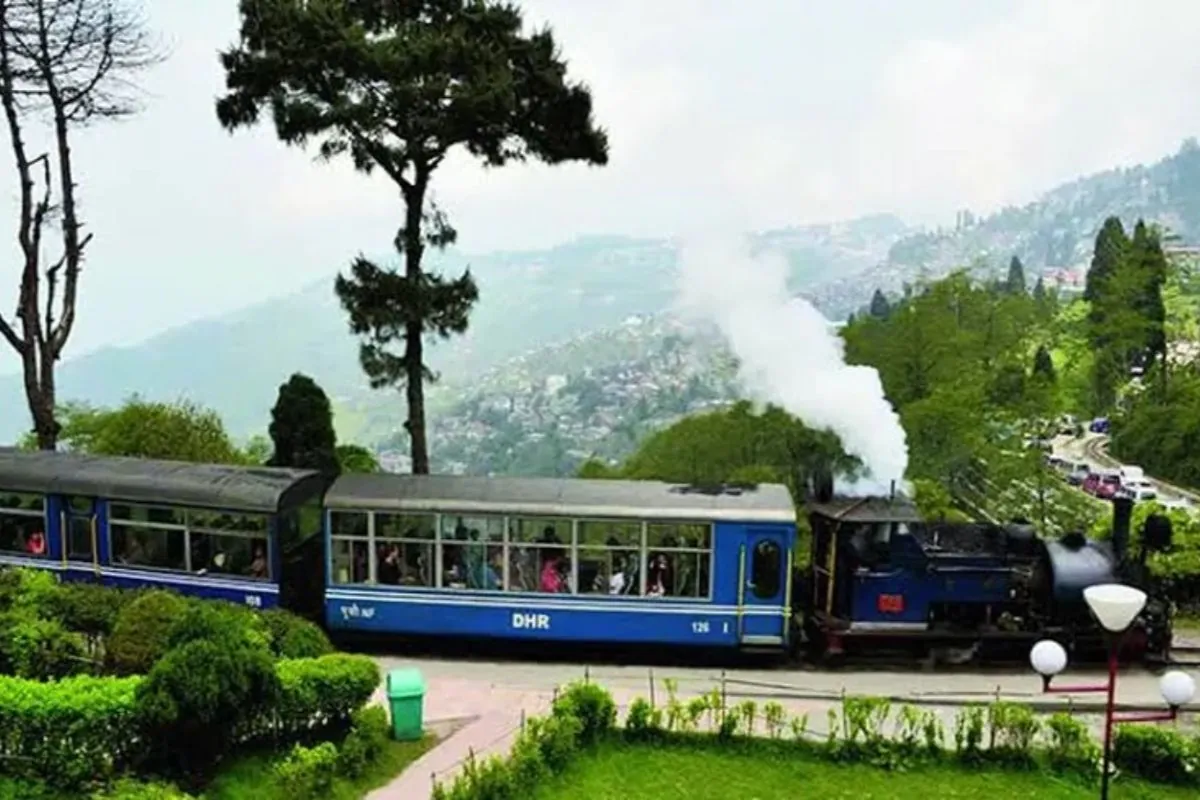
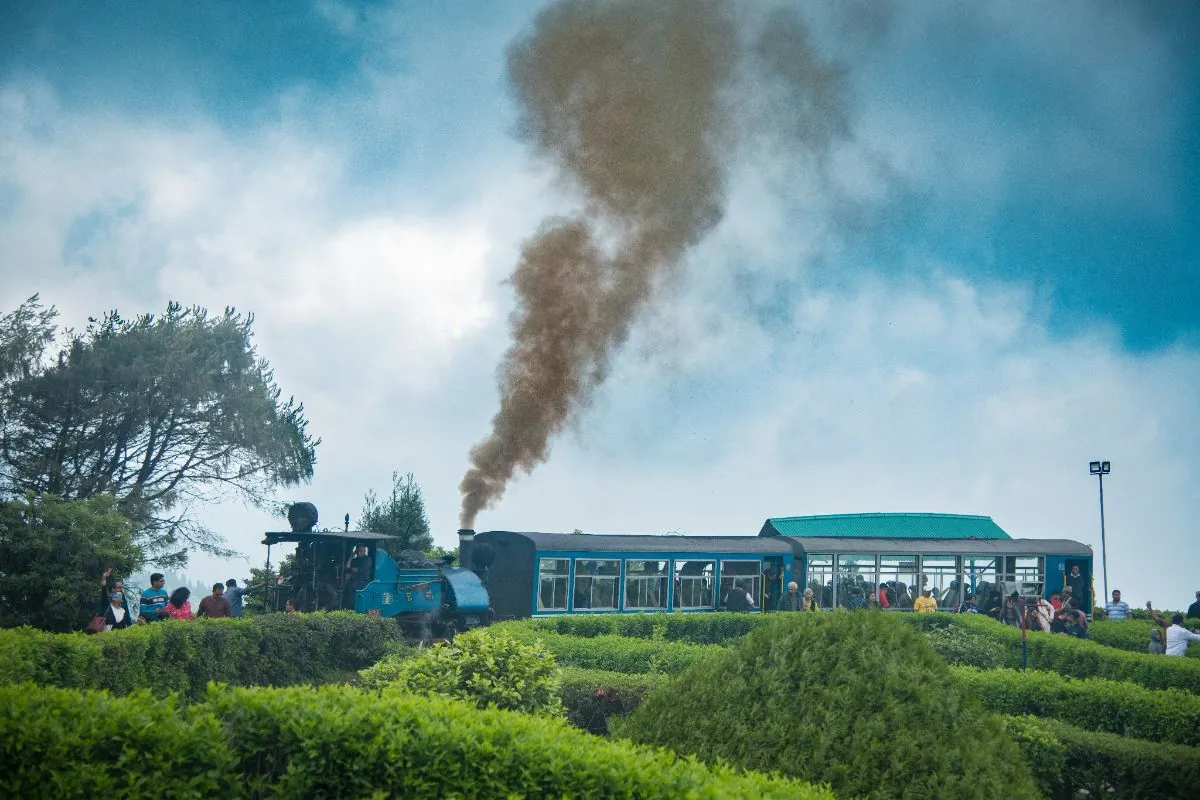
The two-foot-gauge line from the plains to Darjeeling opened in 1881 and is inscribed on the UNESCO World Heritage List as part of the Mountain Railways of India. Most visitors ride the short steam service between Darjeeling and Ghum rather than the full line.
Seats sell out in season and are booked through Indian Railways in advance. We will try to secure them when you book with us, but no operator controls availability and we will not pretend otherwise.
- UNESCO listed
- Book well ahead
- Steam joyride to Ghum
- About 2 hrs round trip
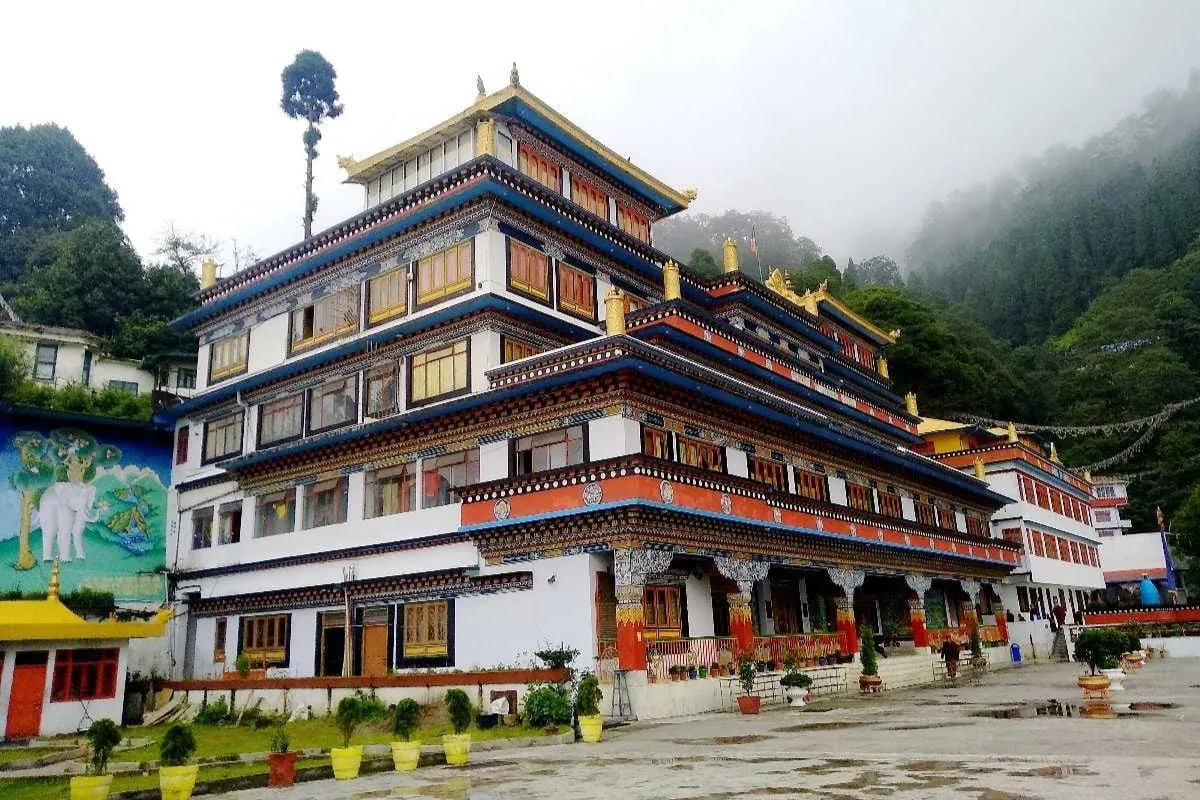
Ghoom Monastery
Yiga Choeling at Ghum, founded in the middle of the nineteenth century, is the best known monastery in the Darjeeling hills and holds a large seated Maitreya Buddha. Ghum sits higher than Darjeeling, and its railway station at roughly 2,258 m is the highest on the line.
The interior is small and often busy in the early morning when the Tiger Hill traffic arrives. If you can, come back later in the day.
- About 2,258 m
- Open all year
- Quietest late morning
- 8 km from Darjeeling
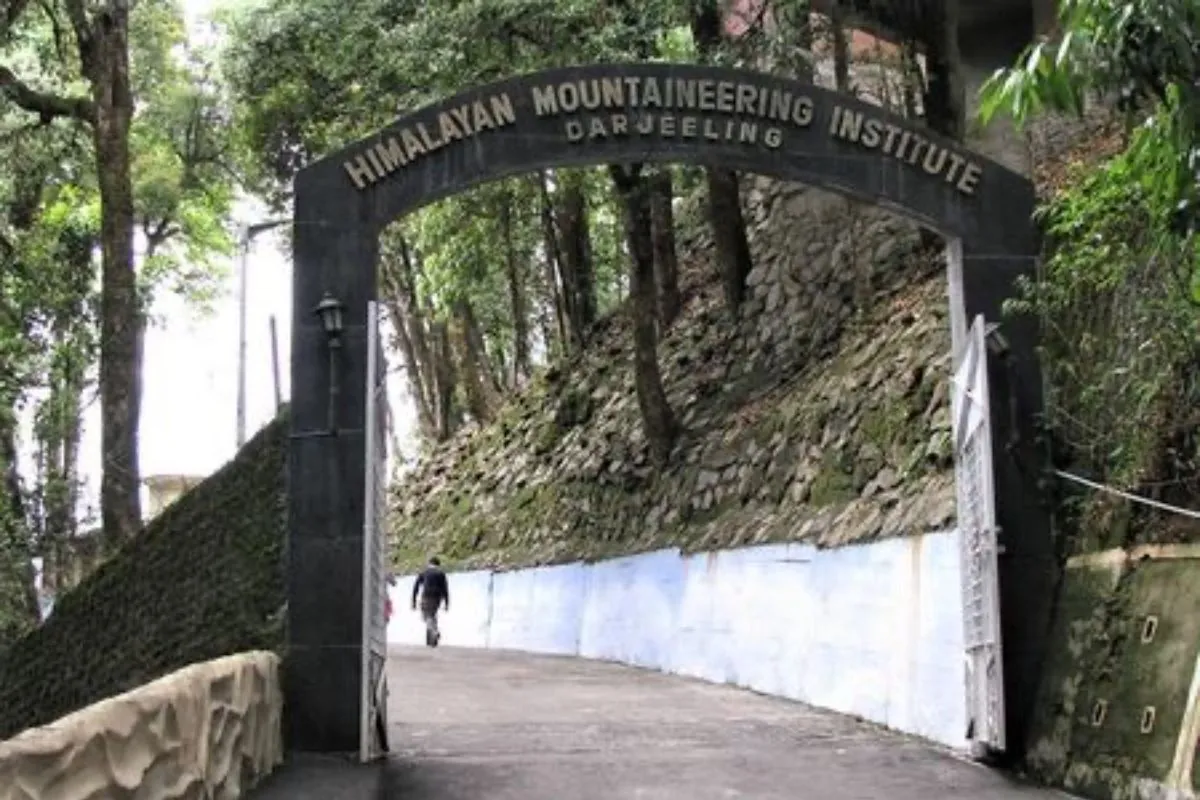
Himalayan Mountaineering Institute
Set up in 1954 in the wake of the first ascent of Everest, the HMI trains climbers and keeps a serious museum of Himalayan mountaineering — expedition equipment, photographs and records going back to the earliest attempts on the great peaks.
It shares a site with the zoological park, so the two are always visited together on one ticket-and-walk combination.
- Museum and training institute
- Shares site with the zoo
- Allow 1–2 hrs
- Closed on some weekdays
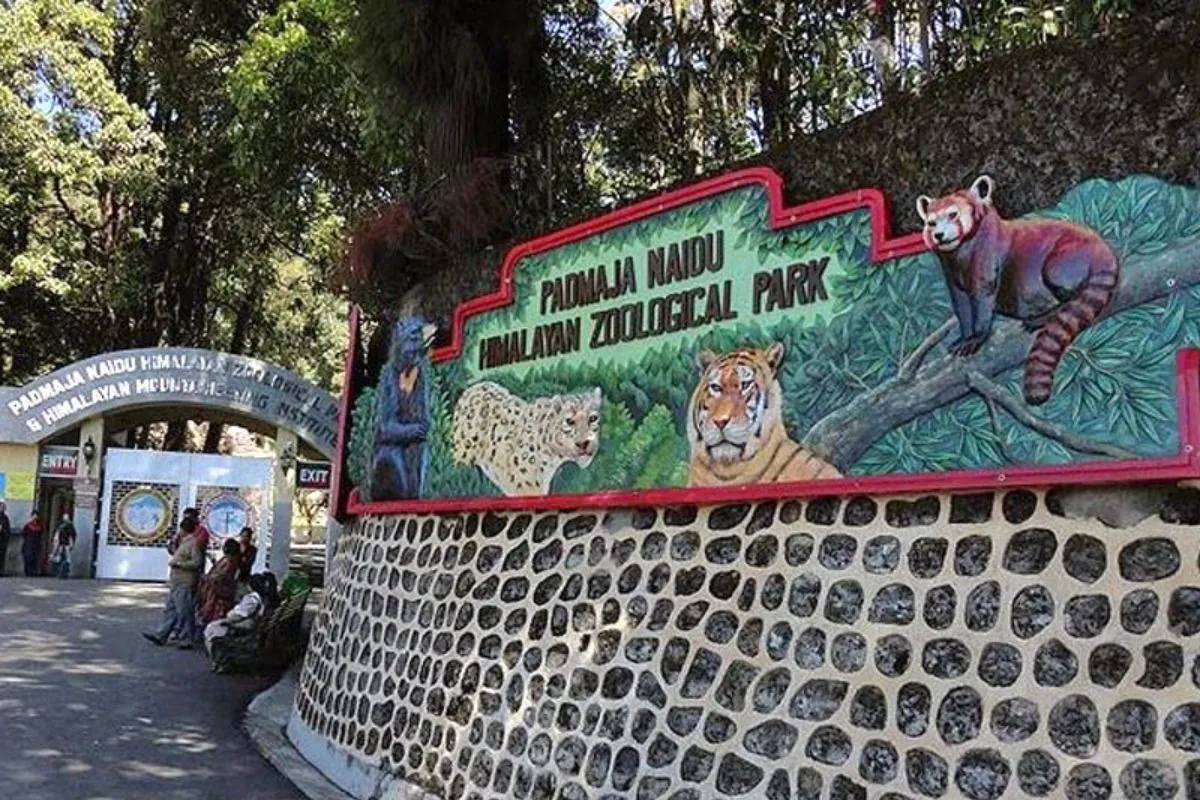
Padmaja Naidu Himalayan Zoological Park
A high-altitude zoo with a genuine conservation programme behind it, known particularly for its breeding work with red pandas and snow leopards. The enclosures follow the contour of the hillside, so this is a walk on a slope rather than a stroll.
Mornings are better for seeing the animals active, and the site closes one day a week.
- Red panda and snow leopard
- Hillside walking
- Allow 1–2 hrs
- Closed one day a week
Japanese Peace Pagoda
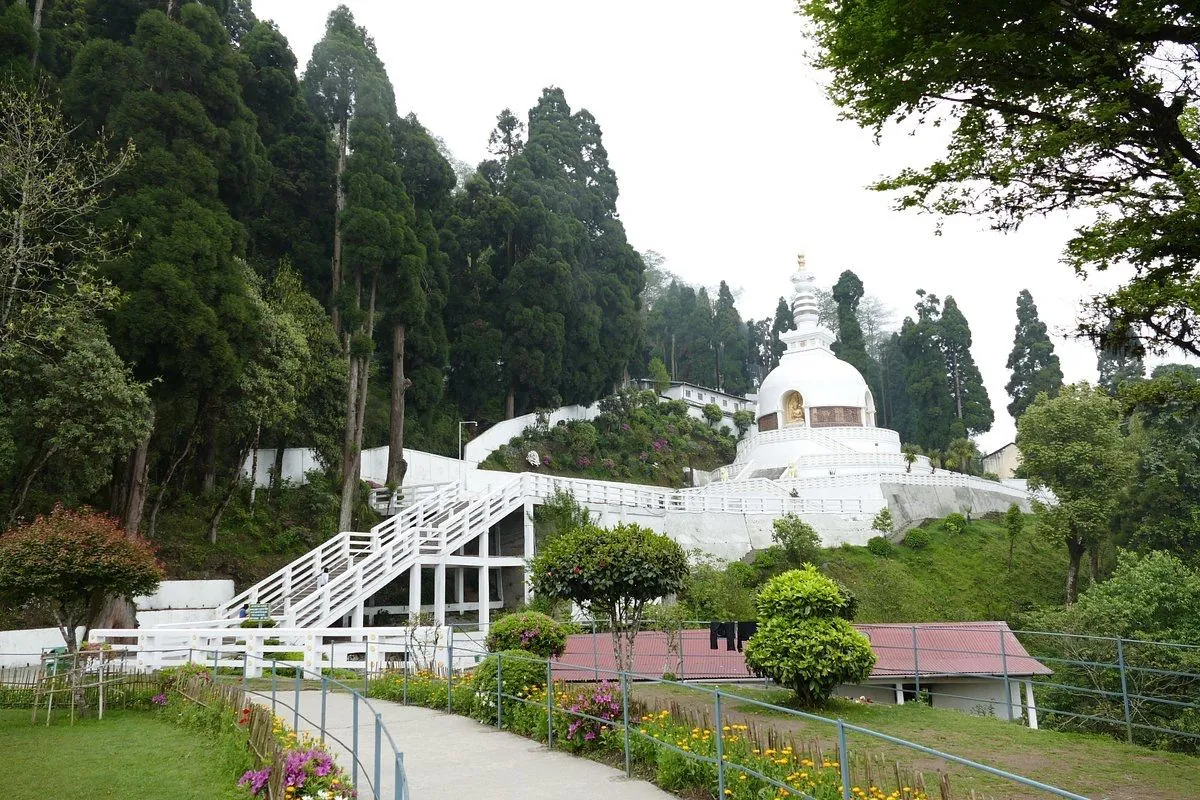
Built by the Nipponzan Myohoji order and opened in 1992, the white pagoda stands on a terraced slope below Jalapahar with drumming at the morning and evening prayers. It is one of the quietest places in Darjeeling and the view north on a clear day is very good.
There are steps involved, but they are gradual. Take the prayer session if the timing works — it is worth planning the afternoon around.
- Opened 1992
- Morning and evening prayers
- Some steps
- Quiet, good views
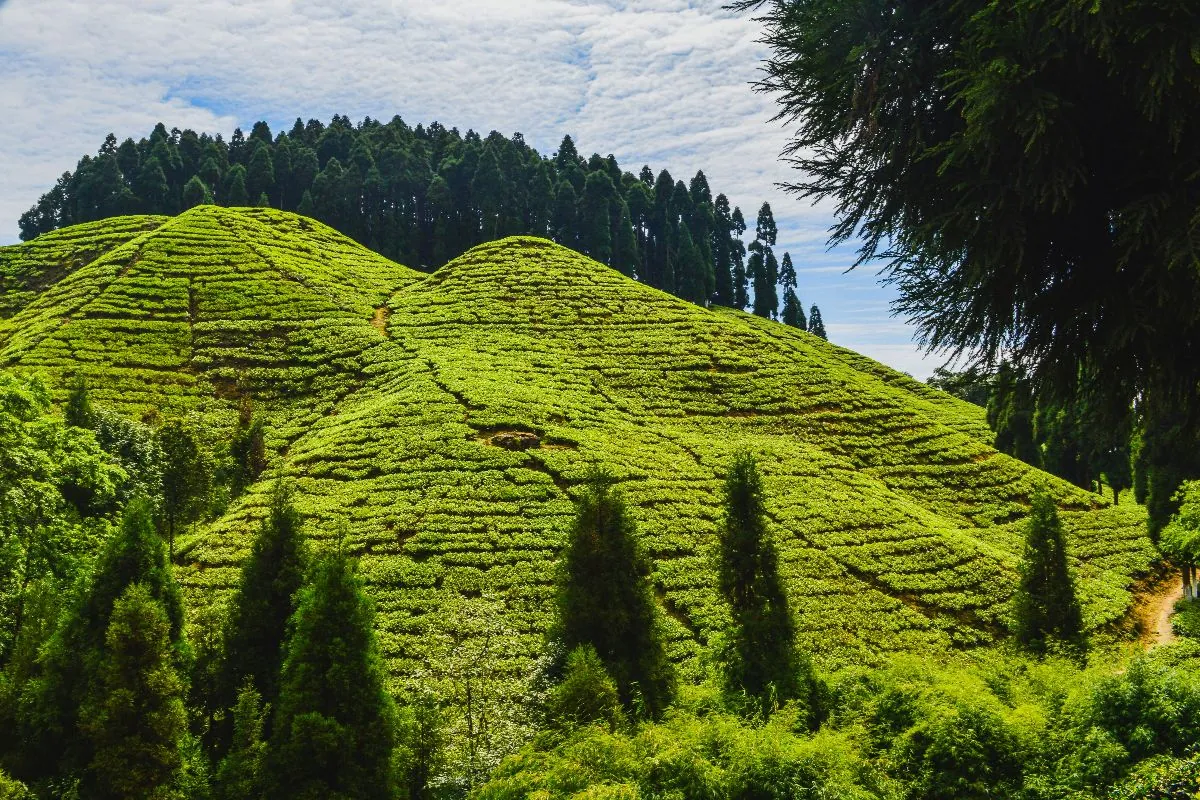
Happy Valley Tea Estate
One of the oldest gardens in Darjeeling, planted in the 1850s, and close enough to town to walk to if you are feeling energetic. During the plucking season you can usually see the factory working and understand how the leaf actually becomes tea.
The garden is at its most photogenic in the first and second flush, broadly March to May. Out of season the factory may be idle.
- Planted in the 1850s
- Factory active in season
- Best March to May
- 3 km from town
Mall Road and Chowrasta
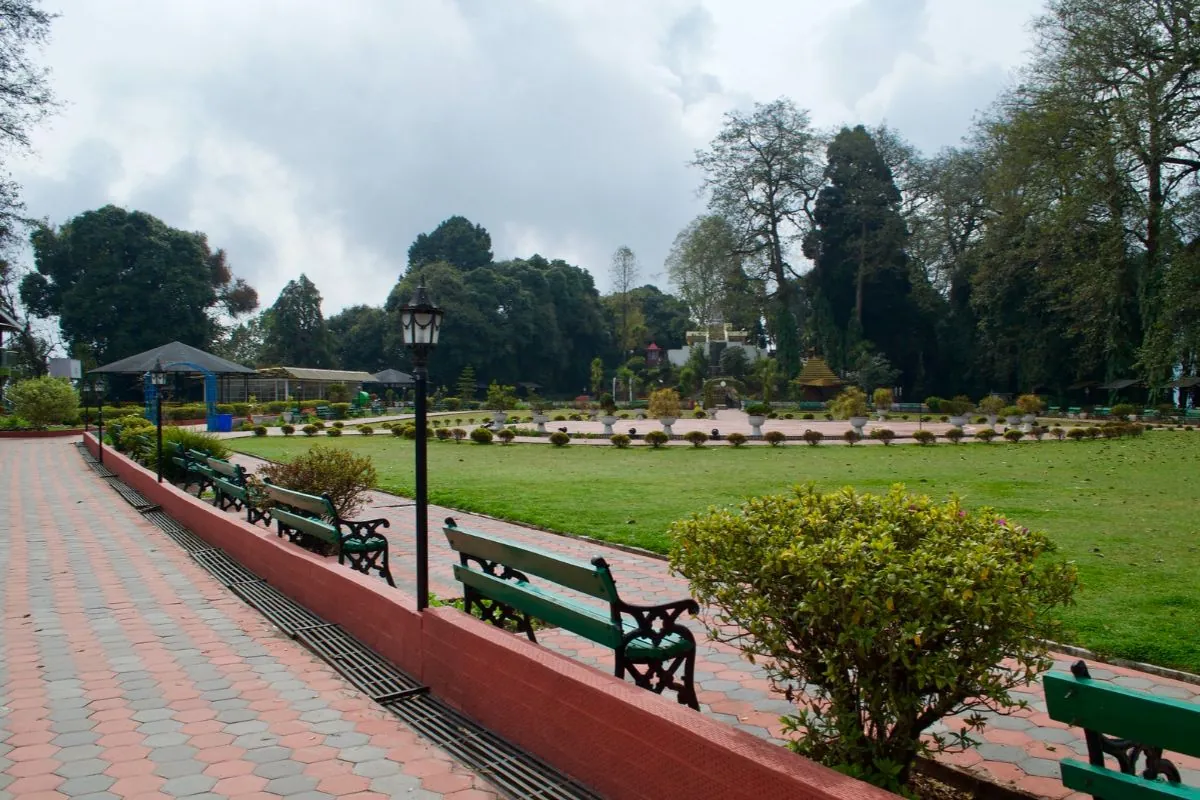
Chowrasta is the flat open square at the top of the town, closed to traffic, with benches, bookshops and the Mall Road walk running off it around the shoulder of the hill. This is where Darjeeling stops being a list of sights and becomes a place to sit.
Leave an evening free for it. The walk round to the north side takes about twenty minutes and is level the whole way — a rarity here.
- About 2,045 m
- Pedestrian only
- Level walking
- Best in the evening
Places Near Darjeeling Worth Adding to Your Trip
Three easy additions, in increasing order of how much time they need.
Rock Garden and Ganga Maya Park
Terraced gardens around a waterfall roughly 10 km below town on a steeply descending road. Pleasant, and a real drop in altitude — the climb back up takes longer than the way down.
- Half day
- Steep road
Tibetan Refugee Self-Help Centre
Established in 1959, still producing carpets, woollens and handicrafts in workshops you can walk through. One of the more meaningful hours you can spend in Darjeeling.
- 1–2 hrs
- Closed Sundays
Mirik
About 49 km away at roughly 1,495 m, built around Sumendu Lake with a walking path right round it and tea gardens on the approach. A full day, and the gentlest outing in the area.
- Full day
- About 1,495 m
Best Time for Darjeeling Sightseeing
Spring
March to May. Mild days, flowering hillsides and the first and second tea flush. Afternoons cloud over regularly, so plan viewpoints for the morning.
Monsoon
June to September. Heavy rain, landslide risk on the hill roads and mountains that stay hidden for days. Cheap, green and genuinely peaceful if that suits you.
Autumn
October and November. The clearest air of the year and the highest chance of a good Tiger Hill sunrise. Peak season, so book early.
Winter
December to February. Cold, bright and quiet, with occasional snow on the higher ridges. Excellent visibility in December; January can be very cold at dawn.
Suggested 2-Day and 3-Day Darjeeling Sightseeing Plan
Two workable shapes, built around a pre-dawn start on the first full morning rather than the arrival day.
Two full days
- Day 1 — Arrive, settle at the hotel, evening at Chowrasta and Mall Road
- Day 2 — Tiger Hill sunrise, Batasia Loop, Ghoom Monastery, then HMI and the zoological park
- Day 3 — Happy Valley Tea Estate and the Peace Pagoda before departure
Three full days
- Day 1 — Arrive, settle, evening at Chowrasta
- Day 2 — Tiger Hill, Batasia Loop, Ghoom Monastery, toy train joyride
- Day 3 — HMI, zoological park, Tibetan Refugee Self-Help Centre, Peace Pagoda
- Day 4 — Happy Valley Tea Estate, Rock Garden or a slow morning, then departure
Those correspond to our 2 Nights 3 Days Darjeeling Tour and 3 Nights 4 Days Darjeeling Tour. If you would rather add Mirik and travel at a slower pace, see the 4 Nights 5 Days Darjeeling Tour.
Darjeeling Travel FAQs
How many days are enough for Darjeeling?
Two nights covers Tiger Hill at sunrise and the main sightseeing loop, but it is tight. Three nights is the comfortable answer and leaves room for a tea estate and an unhurried morning. Four nights lets you add a full day out to Mirik or across to Kalimpong without rushing anything.
What is the best time to visit Darjeeling?
October and November give the clearest views of Kangchenjunga. March to May is mild with flowering hillsides, though afternoon cloud is common. June to September is the monsoon — green, cheap and often completely clouded in. December and January are cold and bright, with occasional snow on the higher ridges.
Is Tiger Hill open throughout the year?
The viewpoint is open year round, but what you see is entirely down to the weather. Clear sunrises are most reliable from October to early December. During the monsoon the mountain is often invisible. Vehicle numbers are managed on the approach road, so the trip is arranged in advance rather than decided on the morning.
How do I book the Darjeeling toy train?
The steam joyride between Darjeeling and Ghum is popular and sells out in season, so it is booked ahead through Indian Railways rather than on the day. Tell us when you are travelling and we will try to secure seats, but availability is outside anyone’s control and we will not promise a specific service.
Can Darjeeling and Kalimpong be combined?
Easily, and most travellers should. They are roughly two and a half to three hours apart by road, and Kalimpong sits at a lower, warmer altitude with far fewer visitors. Adding two nights there gives a very different pace to the second half of a hill trip.
Is Mirik worth adding to a Darjeeling trip?
If you have four nights, yes. Mirik is about 49 km from Darjeeling at roughly 1,495 m, built around Sumendu Lake with a walking path around it and tea gardens on the approach. It makes an easy full day, and it is a gentler outing than another high viewpoint.
Travel information last reviewed: September 2026. Permit rules and access conditions can change; please confirm current requirements with us before you travel.
Put These Days Together
Send us your dates and we will build a Darjeeling itinerary around them — with Kalimpong or Sikkim attached if you have the time.