
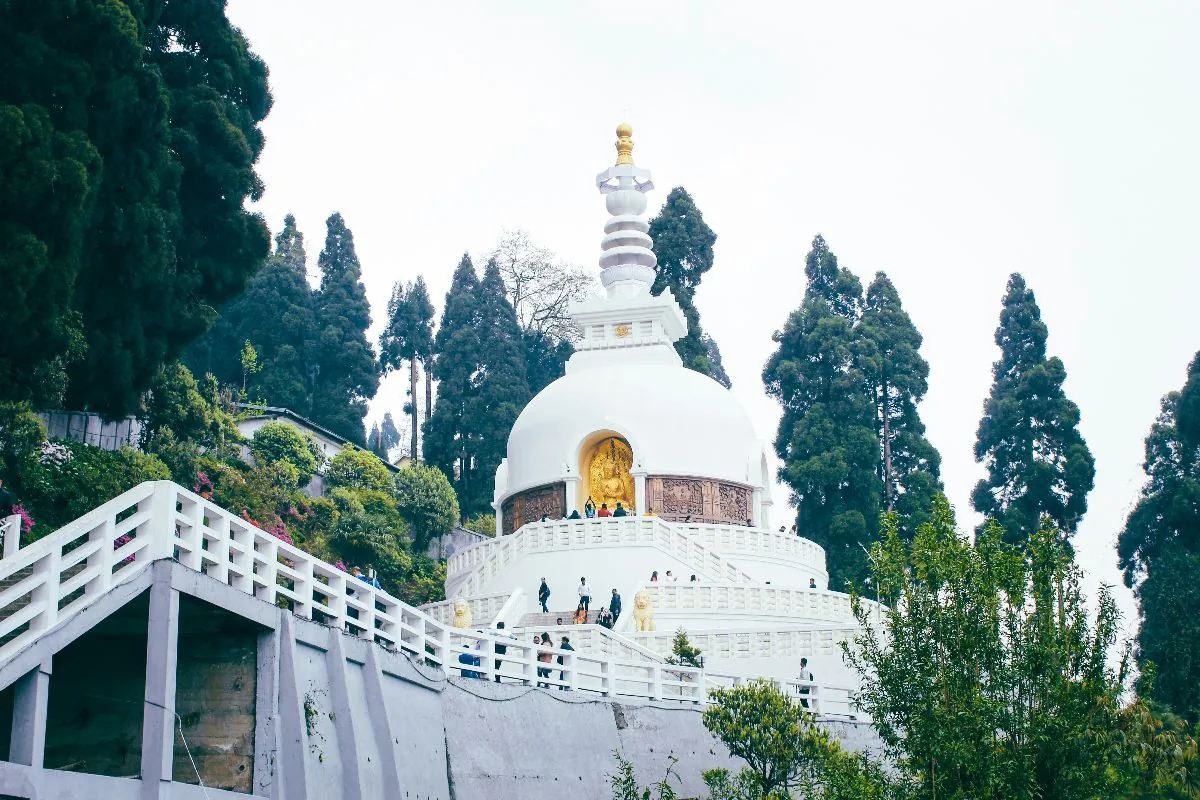
Darjeeling & Kalimpong Travel Information
Darjeeling travel information and the Kalimpong equivalent, side by side. The two hill towns sit eight hundred metres apart in altitude, and about three hours apart by road.
This Darjeeling travel information page covers both hill towns together, because in practice almost nobody visits only one. Darjeeling sits at about 2,045 m with the tea, the railway and the famous sunrise; Kalimpong sits at roughly 1,250 m across the Teesta, warmer and considerably quieter. They are close enough to combine easily and different enough to be worth combining.
Neither requires the permit paperwork that shapes a Sikkim trip, which makes them simpler to plan. What they do require is realistic expectations about hill driving, weather and how much you can fit into a day.
Essential Darjeeling Travel Information
The figures worth having before you plan the days.
Darjeeling town runs along a steep ridge, and almost nothing in it is level. Sightseeing means dropping into valleys and climbing back, so a day that looks light on paper can be tiring. The pedestrian area around Chowrasta and Mall Road is the one genuinely flat stretch, which is part of why it is where everyone ends up in the evening.
The town gets busy in October and November and during the Indian school holidays in May. Outside those windows it is manageable, and in the monsoon it is close to empty. For the sights themselves, see our guide to places to visit in Darjeeling.
Essential Kalimpong Travel Information
Lower, warmer, and much easier on the legs.
Kalimpong travel information is refreshingly short, because the town asks very little of a visitor. The altitude is undemanding, the sightseeing is concentrated within twenty minutes of the centre, and the season is wider than Darjeeling’s — winters are cool rather than cold, and summer evenings are pleasant.
The main practical point is the approach. Kalimpong is reached from the Teesta valley road, which is the same NH10 corridor that serves Sikkim and is the stretch most affected by monsoon landslides. In July and August, build slack into any day that involves that road. The sights themselves are covered in our guide to places to visit in Kalimpong.
How to Reach Darjeeling & Kalimpong
Both are reached from Siliguri, and both are road journeys of about three hours.
- Bagdogra to Darjeeling — About 68 km via Kurseong — usually around three hours, longer in heavy rain or holiday traffic
- NJP to Darjeeling — About 62 km — a similar time; overnight trains from Kolkata arrive in good time for a morning transfer
- Bagdogra to Kalimpong — About 70 km via the Teesta valley — roughly two and a half to three hours
- Gangtok to Kalimpong — About 75 km — roughly three hours, which makes Kalimpong an easy break on a Sikkim transfer
- Onward to Sikkim — Both towns connect to Gangtok on NH10; from Darjeeling allow four to five hours
Best Time to Visit
Spring
March to May. Mild days, flowering hillsides and the first and second tea flush in the Darjeeling gardens. Afternoons cloud over regularly, so plan viewpoints for the morning. Kalimpong’s nurseries are at their best in this window.
Summer
Late May and early June. Warm by hill standards, busy with Indian school-holiday traffic, and prices at their highest. Book early or travel either side of it.
Monsoon
Mid-June to September. Heavy, persistent rain and a genuine landslide risk on the Teesta road. The hills are green and almost empty, and rates drop sharply. Travel is possible with slack in the plan; a tight connection is not.
Autumn
October and November. The clearest air of the year, the best chance of a good Tiger Hill sunrise and comfortable temperatures. This is peak season for both towns and needs booking well ahead.
Winter
December to February. Cold and bright in Darjeeling, with frost at dawn and occasional snow on the higher ridges; cool rather than cold in Kalimpong. Excellent visibility in December, and very few other visitors.
Darjeeling Himalayan Railway Travel Tips
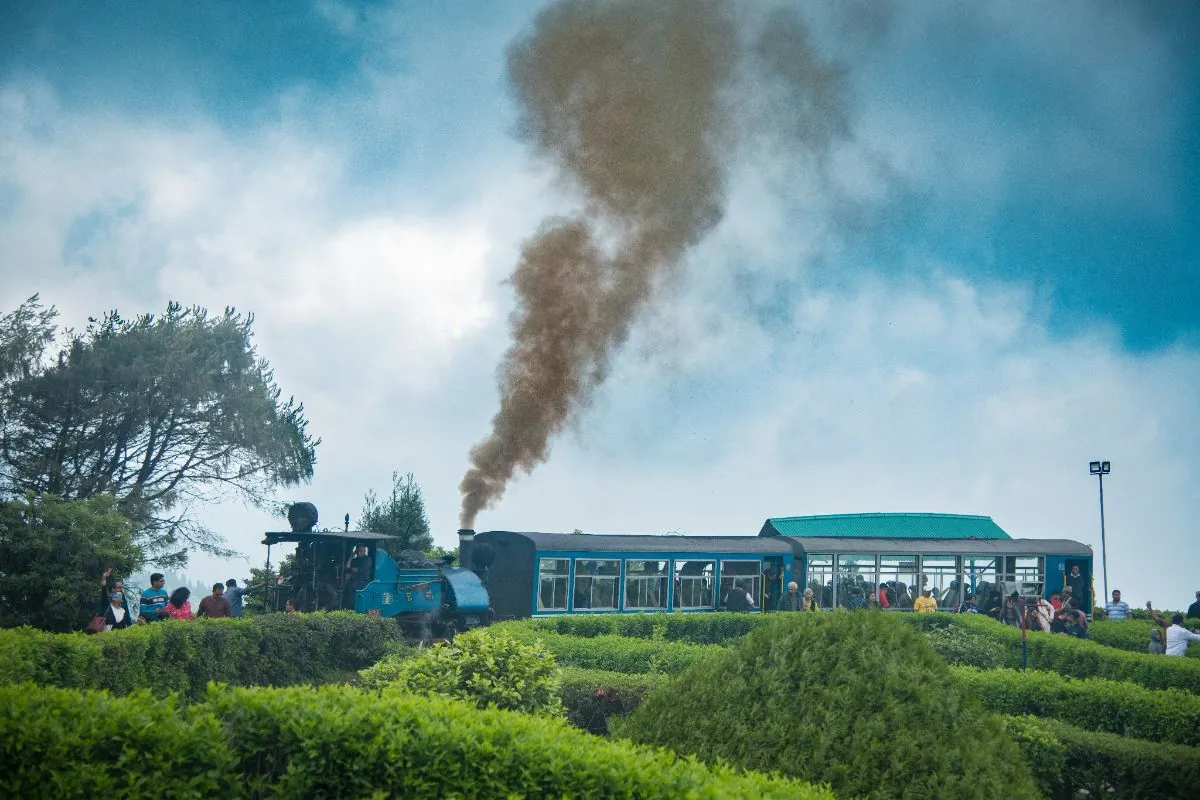
The line opened in 1881 and is inscribed on the UNESCO World Heritage List as part of the Mountain Railways of India. It still runs on two-foot gauge, still uses steam on the joyride services, and still climbs by loop and zig-zag rather than tunnel.
- The short Darjeeling–Ghum joyride is what most visitors ride; the full line from New Jalpaiguri takes most of a day
- Ghum is the highest station on the line, at roughly 2,258 m
- Steam services are limited and sell out in season — book through Indian Railways as far ahead as you can
- Diesel services run more often and cost less, if the locomotive itself is not the point for you
- Services can be cancelled at short notice for weather or maintenance; treat a seat as likely rather than certain
- The Batasia Loop stop is included on the joyride and is where most of the photographs come from
Travel Between Darjeeling and Kalimpong
Fifty kilometres, a river gorge, and about three hours.
The road from Darjeeling drops steeply through the tea gardens to the Teesta, crosses near Teesta Bazaar or Melli, and climbs the far side to Kalimpong. It is one of the more scenic transfers in the region and one of the slower ones — allow two and a half to three hours, and more in the monsoon.
Because the two towns sit at such different altitudes, the transfer makes a natural pivot in an itinerary: high, cool and busy for the first half; lower, warmer and quiet for the second. If you are continuing to Sikkim afterwards, Kalimpong is already on the right side of the river for Gangtok.
Permits and Identification
Considerably simpler than Sikkim — but not nothing.
Indian nationals
- No permit of any kind is required for Darjeeling or Kalimpong
- Carry photo identification for hotel check-in
- Under-18 travellers should carry a birth certificate or school identity card
Foreign nationals
- No hill permit is required; a valid passport and Indian visa are enough
- Carry photocopies as well as the originals — hotels register foreign guests
- If you are continuing into Sikkim, you will need an Inner Line Permit for that leg
If your trip combines these hills with Sikkim, the Sikkim leg has its own and much stricter requirements — see our Sikkim travel information page. Current state guidance for this region is published by West Bengal Tourism.
What to Pack
Less demanding than Sikkim, but the evenings still catch people out.
- A warm layer for the evening in every season — 2,045 m is cool in May too
- Windproof outer and a compact umbrella, particularly March to September
- Comfortable shoes with grip; Darjeeling's streets are steep and often wet
- Something warm for a pre-dawn Tiger Hill start, including a hat
- Sunscreen — the light is strong even when the air is cool
- Photo identification, and passport plus visa for foreign nationals
- A refillable water bottle; most hotels will refill it
- Cash for smaller places, though card acceptance in both towns is good
Darjeeling & Kalimpong Travel FAQs
Do I need a permit for Darjeeling or Kalimpong?
No. Both are in West Bengal, and no Protected Area Permit or Inner Line Permit applies. Indian nationals need ordinary photo identification for hotel check-in. Foreign nationals need their passport and Indian visa, and should carry photocopies as well as the originals.
How far is Darjeeling from Bagdogra Airport?
About 68 km, which usually takes around three hours on the hill road. New Jalpaiguri railway station is a similar distance and a similar time. Journey times depend on weather and traffic through Kurseong, so we would not treat any figure as fixed.
Is the toy train worth doing?
The short steam joyride between Darjeeling and Ghum is worth it for the experience of a working nineteenth-century hill railway rather than for the scenery alone. Seats are limited and sell out in season, so it needs booking well in advance and cannot be guaranteed.
What is the temperature like in Darjeeling?
Cool all year and cold in winter. Summer daytime temperatures rarely feel hot at 2,045 m, and evenings are chilly even in May. December and January bring frost and occasional snow on the higher ridges. Kalimpong, eight hundred metres lower, is consistently warmer.
Can I visit Darjeeling and Kalimpong in the same trip?
Yes, and it is the natural pairing. They are two and a half to three hours apart, and the change in altitude gives the second half of a trip a completely different character. Four to five nights split between them works well.
Is altitude a problem in Darjeeling?
Rarely. At roughly 2,045 m most travellers feel nothing beyond mild breathlessness on the steeper streets for the first day. It is very different from north Sikkim. Anyone with a serious heart or lung condition should still take medical advice before travelling to any hill station.
Travel information last reviewed: September 2026. Permit rules and access conditions can change; please confirm current requirements with us before you travel.
Put a Darjeeling Trip Together
Tell us your dates and how many nights you have, and we will build the days around the weather rather than around a template.