
Sikkim Travel Information: Permits, Weather, Transport & Planning
The Sikkim travel information that actually changes a trip. Which permits apply to whom, what each season does to the roads, how high you go, and what to put in the bag.
Most of the Sikkim travel information a first-time visitor needs comes down to four things: how to get here, what paperwork applies to your nationality, how high the itinerary goes, and what the season is doing to the roads. Get those right and the rest of the trip is straightforward.
This page sets out each of them as we understand the current position. Rules for protected areas are set by the state and do change, so treat everything below as a working guide rather than a guarantee, and let us confirm the position for your dates when you book.
Essential Sikkim Travel Information
The short version, for anyone who wants the shape of it before the detail.
How to Reach Sikkim
Everything funnels through Siliguri, which is where our office is and where almost every trip starts.
By air
Bagdogra Airport (IXB) near Siliguri is the practical gateway, with direct flights from Delhi, Kolkata, Mumbai, Bengaluru and Guwahati. Pakyong Airport near Gangtok operates a limited schedule and is weather-sensitive, so we plan around Bagdogra unless you tell us otherwise.
- IXB to Gangtok about 125 km
- Transfers arranged both ways
By rail
New Jalpaiguri (NJP) is the railhead, roughly 12 km from Siliguri, with services from Kolkata, Delhi and Guwahati. Arriving by an overnight train and driving up the same morning is a long day but a common and workable one.
- NJP to Gangtok about 125 km
- Book sleeper class well ahead
By road
NH10 runs up the Teesta valley from Siliguri to Gangtok. It is the main artery into the state and the one road everything depends on. Journey times vary with weather and roadworks, and we would rather give you a range than a promise.
- Usually 4–5 hours
- Longer during the monsoon
Sikkim Permit Information
This is the part most sites blur. There are two different permits, they do different jobs, and which ones apply depends on your nationality and on exactly where you are going.
Entering Sikkim
Indian nationals need no permit to enter Sikkim. Ordinary photo identification is enough.
Foreign nationals need an Inner Line Permit, also referred to as a Restricted Area Permit, simply to enter the state. It can be obtained through Indian missions abroad, the FRRO, Sikkim House in Delhi or Kolkata, at the Rangpo check post, and through registered travel agencies such as ours.
Protected areas inside Sikkim
Every traveller, Indian or foreign, needs a Protected Area Permit for the restricted zones. These are issued by the Tourism Department, the permit cell or the police check post depending on the area, and applied for through a registered travel agency rather than by individuals.
A domestic Protected Area Permit is not an Inner Line Permit. They are separate documents with separate purposes.
Which zones need a Protected Area Permit?
- Tsomgo Lake — Indian and foreign nationals, with a vehicle permit issued separately
- Baba Mandir — Indian nationals; foreign nationals are permitted only as far as Tsomgo Lake
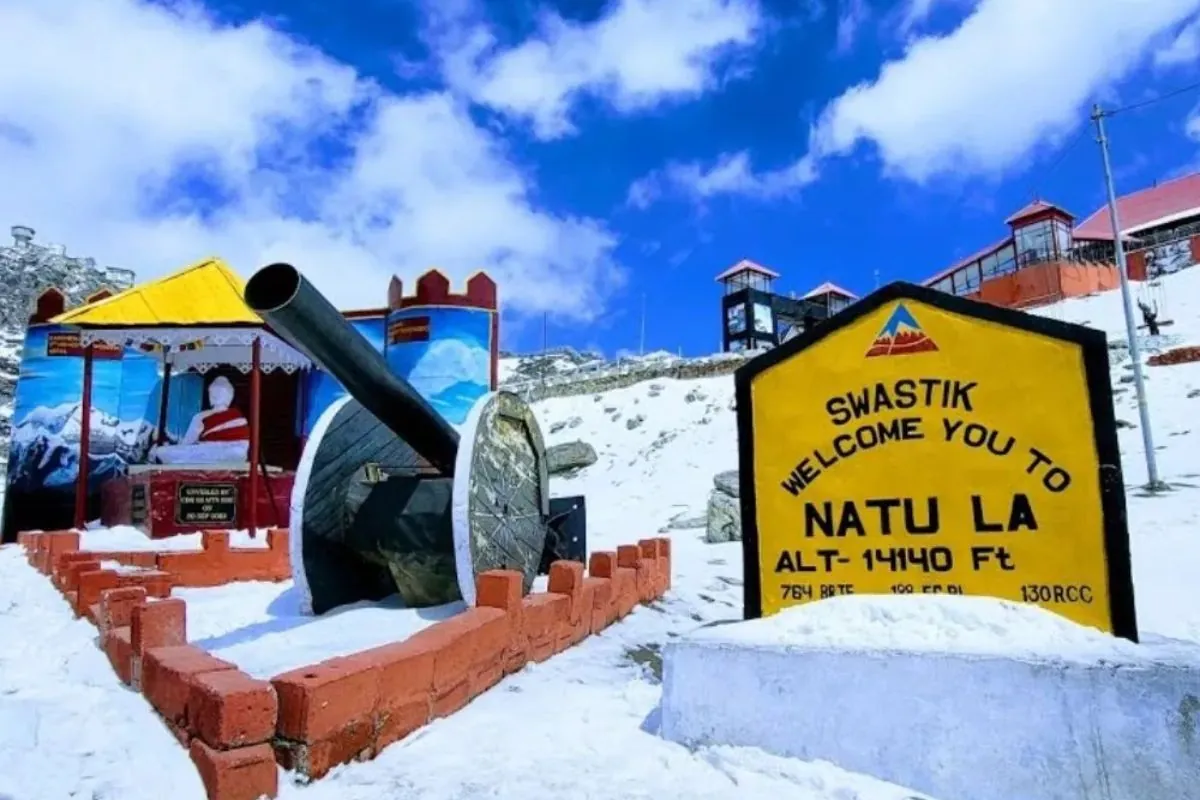
- Nathu La — Indian nationals only, on certain days, and subject to closure at short notice
- Zuluk / Silk Route — Indian nationals only
- Lachen, Lachung, Yumthang — Indian and foreign nationals; foreign passport holders must apply through a registered agency in a group of two or more
- Gurudongmar Lake — Indian nationals only; foreign nationals are permitted as far as Thangu
- Trekking routes — Dzongri, Goecha La, Singalila and Green Lake need clearance from the Forest and Home departments, and on some routes the Army
Documents to send us
Indian nationals
- Voter ID card or driving licence
- Two passport-size photographs per traveller
- Under 18: birth certificate, or the father's voter ID or passport
- Aadhaar is not accepted as identity proof for these permits
Foreign nationals
- Photocopy of a valid passport
- Photocopy of the Indian visa
- Two passport-size photographs per traveller
- Originals carried with you, plus the Inner Line Permit
- North Sikkim corridor: a group of two or more
Two-wheelers entering protected areas must have an engine capacity of 150 cc or more, and need the registration certificate, driving licence, pollution certificate, insurance, two photographs and identity proof for both rider and pillion. National park and wildlife sanctuary entry permits are issued separately by the Forest Department at Gangtok.
Send us your documents at least 48 hours before the permit day, and carry the originals with you — they are checked at the post, not just at the office. Official guidance is published by Sikkim Tourism, Government of Sikkim.
Best Time to Visit Sikkim
Each season closes something and opens something else.
Spring
March to May. Rhododendron and magnolia move up the hillsides, the north Sikkim valleys reopen after the snow, and days are mild. Afternoons cloud over often, so viewpoints are a morning job. This is the best window for Yumthang and the Shingba sanctuary.
Summer and monsoon
June to September. Warm, green and much cheaper, with a real risk of landslide delay on NH10 and mountain views that appear for minutes at a time. Travel is perfectly possible; it just needs slack built into the plan.
Autumn
October and November. The clearest air of the year, the best mountain views and the most reliable roads. This is peak season and everything — hotels, vehicles, permits — needs booking well ahead.
Winter
December to February. Cold, bright and very quiet. Snow closes the highest roads, so Nathu La, Gurudongmar and Zero Point become unreliable or shut. Gangtok, Pelling and the south stay comfortable and empty.
Sikkim Weather & Altitude
Sikkim covers an extraordinary altitude range in a very small area. You can leave the plains at around 120 m and be above 4,000 m the next afternoon, all of it by road. Temperature, oxygen and weather all change with that, and the itinerary has to respect it.
- Siliguri — About 120 m — warm, humid, the start of every trip
- Gangtok — About 1,650 m — mild, the usual base
- Pelling — About 2,150 m — cool evenings all year
- Lachung — About 2,700 m — cold nights, basic heating
- Yumthang — About 3,564 m — snow into spring
- Tsomgo Lake — About 3,753 m — freezes in winter
- Nathu La — About 4,310 m — snow much of the year
- Gurudongmar — About 5,430 m — the highest point on any of our itineraries
Getting Around Sikkim
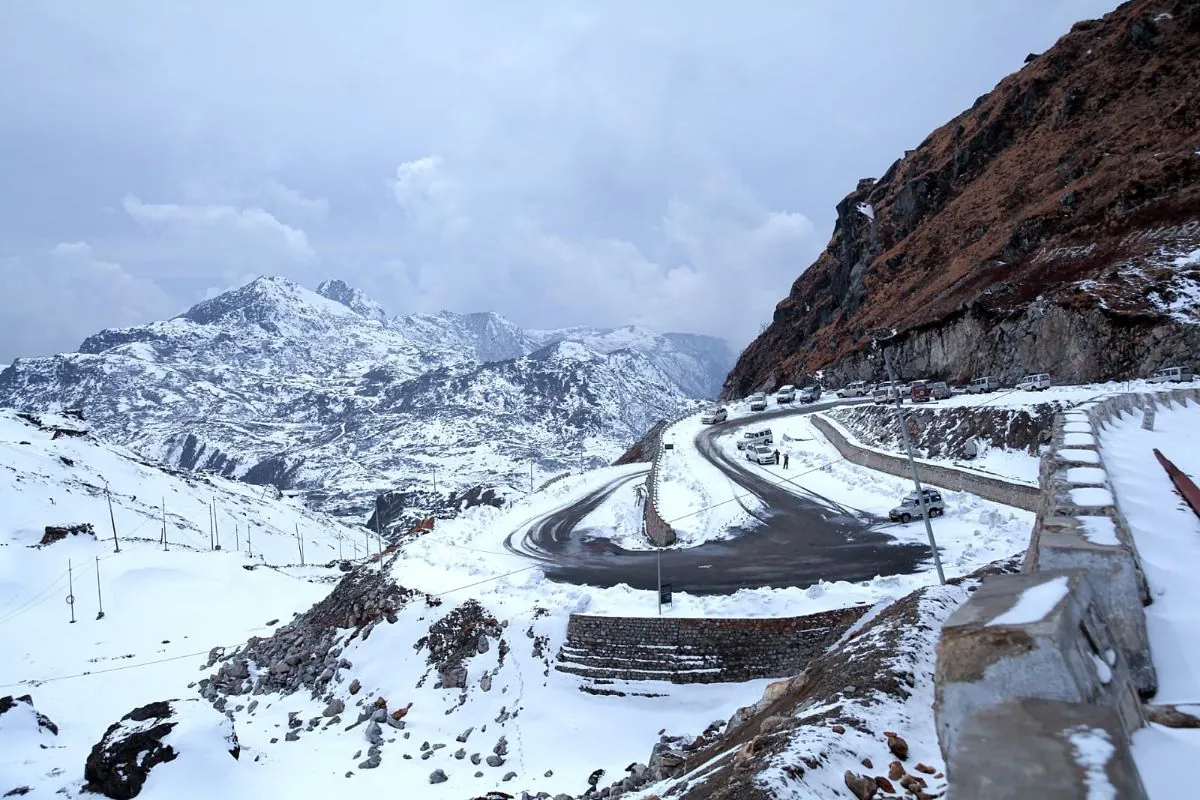
There is no railway and no internal flight network. Everything happens by road, and the road decides the day.
- Private vehicle with driver. The practical choice for a planned itinerary, and essential for protected areas, where the vehicle itself carries a permit.
- Shared jeeps. Cheap, frequent between the main towns, and fine if you have time to spare and no fixed schedule.
- Taxis in Gangtok. Available from the town stands for local sightseeing, though not all are cleared for the high routes.
- Driving times, not distances. Hill roads average far less than you expect — 100 km can take four hours, and does.
- North Sikkim. Reached only on organised runs with permits and a cleared vehicle; there is no practical independent option.
- Fuel and cash. Both thin out north of Chungthang. Draw cash in Gangtok and do not rely on finding an ATM in the villages.
What to Pack
Written for a spring or autumn trip that includes one high day. Add more for winter, subtract very little.
Clothing
- Layers rather than one heavy coat
- Windproof and waterproof outer
- Warm hat and gloves, even in summer
- Broken-in walking shoes with grip
- Something warm for the evening indoors
Documents
- Original ID used for your permit
- Spare passport-size photographs
- Passport, visa and ILP for foreign nationals
- Printed copies of hotel and permit confirmations
- Travel insurance details
Practical
- Refillable water bottle
- Sunscreen and sunglasses — the light is fierce at altitude
- Regular medication in hand luggage
- Power bank; supply can be intermittent in the north
- Cash, drawn in Gangtok
Health & High-Altitude Travel
Read this section properly if your itinerary includes north Sikkim or Nathu La.
These are road destinations rather than climbs, and that is exactly what makes them worth thinking about. A vehicle can carry you from 1,650 m to well over 4,000 m in a morning, far faster than anyone would choose to ascend on foot. Altitude affects people unpredictably: fitness, age and previous experience are all poor predictors.
We are a travel agency, not a medical service, and nothing here is medical advice. What we can tell you is how we plan around it, and what we ask of you.
- We build an acclimatisation night into every north Sikkim itinerary rather than driving straight through
- High stops are kept short, and we start early so there is daylight to come down in
- Drink considerably more water than you feel you need, and skip alcohol on climbing days
- Tell your driver or guide early if you feel unwell — a headache, nausea or breathlessness is a reason to descend, not to push on
- We will turn a vehicle around if someone in the party is struggling, and we would rather do that than complete an itinerary
- If anyone is pregnant, has a heart or lung condition, or is travelling with a very young child, please take medical advice before booking the north
Responsible Travel Tips
Sikkim takes this more seriously than most Indian states, and visitors are expected to keep up.
- Carry a refillable bottle — Sikkim restricts single-use plastic, and hotels and homestays will refill it
- Take your waste back down with you, particularly from the high stops where there is no collection at all
- Remove shoes and hats in monastery shrine rooms, and ask before photographing inside or photographing people
- Walk clockwise around chortens and mani walls, which is simply what is done here
- Do not feed or crowd the yaks; they are working animals, not an attraction
- Stay on marked paths at Tsomgo, Yumthang and Gurudongmar — the ground recovers extremely slowly at that altitude
- Buy locally, and choose homestays and local guides where you reasonably can
- Ask before flying a drone; much of Sikkim is restricted airspace and permission is rarely given
Sikkim Travel Information FAQs
Do Indian citizens need a permit to enter Sikkim?
No. Indian nationals can enter Sikkim with ordinary photo identification. What they do need is a Protected Area Permit for specific zones — Tsomgo Lake, Baba Mandir, Nathu La, Zuluk and everything in north Sikkim beyond Chungthang. That permit is issued through registered travel agencies, not to individuals at the gate.
What permit do foreign nationals need for Sikkim?
Two separate things. An Inner Line Permit, also called a Restricted Area Permit, to enter the state at all; and a Protected Area Permit on top of that for each restricted zone you are allowed into. The second is applied for through a Sikkim-registered agency, and for the north Sikkim corridor in a group of two or more.
Why is Aadhaar not accepted for Sikkim permits?
Aadhaar is not accepted as identity proof for Protected Area Permits in Sikkim. Voter ID or a driving licence is what the permit offices ask for, along with two passport-size photographs. This surprises a lot of travellers, so it is worth checking what you are carrying well before you leave home.
How long does the drive from Bagdogra to Gangtok take?
Usually somewhere between four and five hours for roughly 125 km on NH10, though we would not treat that as a promise. Landslides, roadworks and monsoon conditions can all add to it, and occasionally the road closes entirely for a period. We build a cushion into departure days for exactly this reason.
Is Sikkim safe for solo travellers?
Sikkim is generally regarded as one of the easier states in India to travel in, and solo travellers are common. The practical constraints here are roads, weather and altitude rather than personal safety. Mobile coverage is patchy in the north, so leave your itinerary with someone.
Can I drink the tap water in Sikkim?
We would not recommend it. Carry a refillable bottle and use filtered or boiled water — most hotels and homestays will refill it for you. Sikkim also restricts single-use plastic, so a refillable bottle is the practical choice as well as the responsible one.
What mobile network works best in Sikkim?
Coverage in Gangtok and the main towns is reliable across networks. It thins out quickly on the high roads and in north Sikkim, where there may be none at all for long stretches. Foreign SIM cards will not roam onto Indian networks in restricted areas, so plan to be out of contact for parts of the day.
Travel information last reviewed: September 2026. Permit rules and access conditions can change; please confirm current requirements with us before you travel.
Let Us Check the Detail for Your Dates
Permit rules, road conditions and seasonal access all move. Tell us when you are travelling and we will confirm the current position rather than leave you reading a page.